
Sea Trials - USCG License Exam
Lokey Labs, LLCEducation
4.5172.00 Reviews
- Version
- 8.9.2
- Installs
- 10.00K
- Age Rating
- Everyone
Screenshots
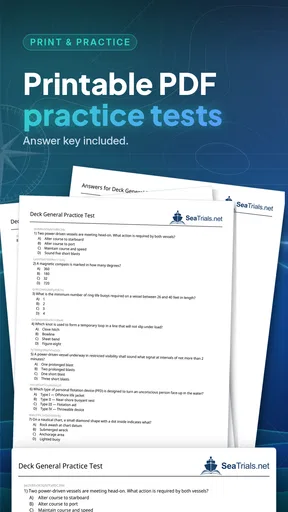
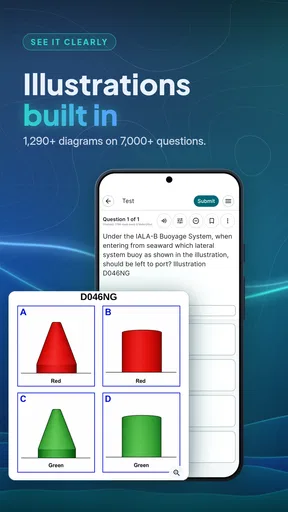
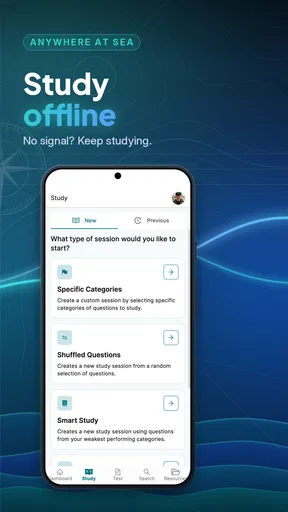
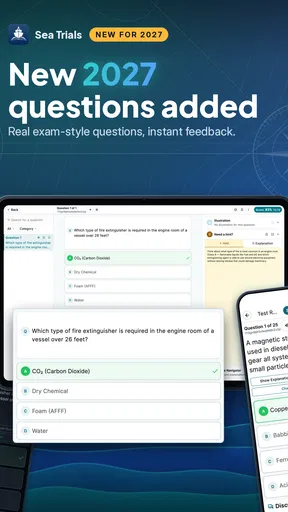
Our Review of Sea Trials - USCG License Exam
 Analysis by Appyee
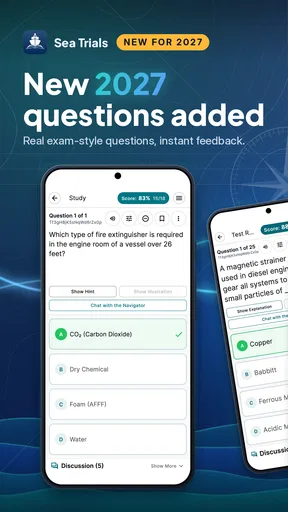
I approached Sea Trials - USCG License Exam as a study tool rather than a casual boating app. Its purpose is clear: help people prepare for a United States Coast Guard license exam through practice-based learning. That narrow focus is its biggest strength, because I never had to sort through unrelated lessons or entertainment features before getting to maritime exam preparation.
The app sits in the education category, comes from Lokey Labs, LLC, and is free to install. It is rated for Everyone, which makes the presentation approachable, although the subject itself is aimed at people dealing with serious boating responsibilities. With a 4.5 average from around 328 ratings and more than 10,000 installs, it has attracted a meaningful group of learners without feeling like a huge, anonymous platform.
My overall impression is that this is most useful when I treat it as a repeatable revision companion. It can help me recognize terminology, test my recall, and identify topics that need more attention. I would not treat it as a complete substitute for official Coast Guard requirements, approved instruction, or practical experience. That distinction matters: passing practice questions and being ready to operate professionally are related goals, but they are not the same thing.
How the study experience builds confidence
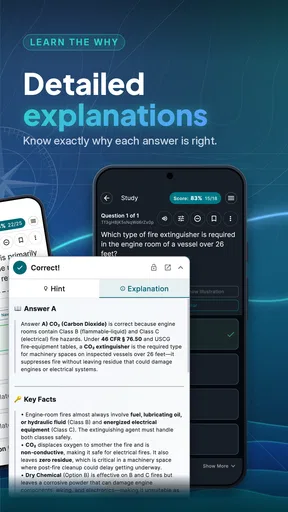
I find confidence grows when practice is treated as a check on understanding, not a score to chase. In this section, I focus on how reviewing the reasoning behind a missed answer can make study sessions more useful, while keeping the app in its proper role alongside dependable instruction and references. That approach also sets up a closer look at the small choices and routines that can make revision more consistent.
A focused tool for license preparation
The strongest part of the concept is the direct connection between the app and the USCG license exam. A general boating app might teach basic safety, navigation, or rules in a broad and informal way. Sea Trials is more valuable to someone who already knows why they are studying and wants a structured way to keep exam material active in memory.
I find that kind of focus especially helpful during short gaps in the day. Instead of opening a large course and searching for the right chapter, I can use a practice session as a compact review. That makes it suitable for a learner who has already read study material and needs to reinforce it, rather than someone beginning with no understanding of nautical language.
The app’s name and short store description point toward sea trials, but the practical value is in using it as an exam-oriented checkpoint. I would use it after reading a chapter on navigation, rules of the road, safety, or deck operations, then return to see whether I can answer questions without looking at notes. When I miss a question, the mistake becomes a prompt to revisit the underlying subject instead of simply guessing again.
Why repeated practice works better than passive reading
Reading a manual can create a false sense of familiarity. I may recognize a term on the page and assume I understand it, only to struggle when the wording changes. A question-based app exposes that gap quickly. For license preparation, this is useful because exam-style recognition requires more than highlighting paragraphs.
My preferred workflow would be to study one topic away from the app, complete a short practice round, and record the concepts behind the mistakes. I would not write down only the correct answer. I would note why the other choices were wrong, what rule or principle controlled the answer, and whether the confusion came from vocabulary, calculation, or interpretation. That turns the app into a diagnostic tool rather than a simple score generator.
A second useful habit is delaying the next attempt after a mistake. Repeating the same question immediately can reward short-term memory instead of understanding. I would review the relevant material, wait until later, and then test myself again. This is a small but important trade-off: the app can make revision convenient, but the learner still has to create a disciplined study method around it.
Who will get the most from it
I see the best fit in recreational boaters moving toward professional credentials, crew members preparing for a licensing step, and experienced mariners who want a portable refresher. It may also suit someone who has already enrolled in a course and wants extra practice between classroom sessions.
It is less suitable for a complete beginner who expects the app to teach every concept from the ground up. A person unfamiliar with chart work, navigation terms, vessel operations, or regulatory language may need a textbook, instructor, or formal course first. Practice questions are much easier to use when I already have enough context to understand why an answer is correct.
I would also be cautious about using it as the only preparation method. A license exam can involve knowledge that is difficult to reduce to quick prompts, and real-world competence includes judgment, communication, equipment handling, and safe decision-making. The app can support those goals, but it cannot replace time on the water or guidance from a qualified instructor.
Using it in a realistic weekly routine
Imagine I work during the day and have a licensing exam approaching. On Monday, I read a navigation section from my main study source. During a lunch break, I use Sea Trials to check basic recall. On Wednesday, I repeat the exercise but focus on questions I previously missed. At the weekend, I review the source material again and use a longer study session to connect separate topics.
That routine gives the app a clear job. It is not my textbook, instructor, or official authority. It is the quick feedback layer between deeper study sessions. The same approach works for someone who has limited time: a few focused checks are more useful than opening the app without a plan and tapping through questions until the answers feel familiar.
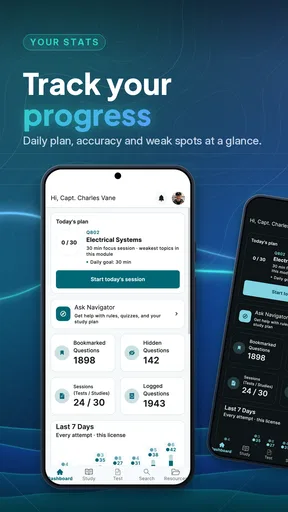
One non-obvious advantage of this workflow is that it can reveal uneven preparation. I might feel comfortable with general boating knowledge but repeatedly stumble over a narrower licensing topic. Without practice, I could spend equal time on everything. With targeted review, I can direct my limited study hours toward the areas that actually need work.
Trust, controls, and visible user choices
When I evaluate an education app, I look beyond the subject matter. I want to know what I am being asked to do, what the app’s purpose is, and whether the experience gives me understandable choices. Here, the central function is easy to identify: license exam preparation. That clarity makes the app easier to judge than a broad platform that combines study tools, social features, entertainment, and unrelated services.
I would still review the permission prompts and account screens carefully during installation and first use. I do not assume that a simple study purpose automatically answers every privacy question. If the app requests access that does not seem connected to practice sessions, I would pause and decide whether that access is necessary. The responsible approach is to use the operating system’s permission controls and avoid granting optional access without a clear reason.
The app is free, but it includes in-app purchases ranging from about thirty dollars to three hundred dollars per item. That is an important point for anyone deciding whether to try it. I would inspect the purchase screen before committing, confirm exactly what an item unlocks, and make sure the payment choice is deliberate rather than an accidental tap during study. A free download does not mean every part of the experience is free.
For families, the Everyone content rating is reassuring at the level of general audience suitability, but the purchase range still deserves attention. If a younger user shares a device, I would enable purchase authentication and check the store’s parental controls. The rating describes the content audience; it does not remove the need to manage spending carefully.
Data-sensitive moments during study
Study apps can become personal in small ways. I may reveal which subjects I find difficult, how often I practice, or whether I am preparing for a professional goal. Even when the information seems harmless, I prefer to make choices consciously. I would avoid entering unnecessary personal details and would read any account, sign-in, or purchase screens before continuing.
I also recommend separating study notes from sensitive documents. There is no reason to place license numbers, employer information, vessel registration details, or private contact information into a practice tool unless a clearly explained function requires it. Keeping the app limited to learning makes the privacy decision simpler and reduces the consequences of sharing more than necessary.
On a shared phone or tablet, I would sign out of any account that is not mine and check whether progress or purchase information remains visible to other users. On a personal device, I would keep the operating system updated and use the platform’s normal security controls. These are ordinary precautions, but they matter more when an app is used repeatedly over a long study period.
Another practical issue is connectivity and concentration. I would test the study flow before relying on it during travel or near the water. If I cannot access a session, I would not want that interruption to replace my main study plan. I would also avoid studying while operating a vessel or handling equipment. A phone-based quiz belongs at the dock, at home, or during a safe break, never during active navigation.
How it compares with other preparation options
Compared with a printed manual, Sea Trials is more interactive and better at exposing recall problems quickly. A book remains stronger for detailed explanations, diagrams, references, and slow, careful reading. I would choose the manual when learning a subject for the first time and the app when checking whether that learning is sticking.
Compared with a classroom course, the app is more flexible and less dependent on a schedule. A course is better when I need an instructor to explain a difficult rule, correct a misunderstanding, or connect theory with real vessel operations. If I am struggling to understand why an answer is correct, a teacher or experienced mariner may provide more value than another round of questions.
Compared with broad boating apps, this one has a clearer licensing purpose. A general navigation or weather app may be more useful for planning an actual trip, checking conditions, or practicing chart-related tasks in a practical setting. Sea Trials should not be selected as a replacement for those tools because its role is exam revision, not voyage planning.
Compared with a large online course platform, it may feel more direct for someone who wants practice without a long video curriculum. The trade-off is depth. A full course can provide a learning path, instructor support, downloadable references, and richer explanations, while a focused quiz app is easier to open but places more responsibility on the learner to supply the background knowledge.
Where the app can create false confidence
The main weakness of any exam-practice app is the temptation to measure progress by familiarity. If I see the same question repeatedly, I may remember its position or wording without mastering the principle behind it. To avoid that, I would explain each answer aloud, change the order of my study topics, and confirm difficult points in a trusted reference.
I would also be careful with scores. A strong result is encouraging, but it is not proof that I meet every official requirement or can handle a real situation. A better measure is whether I can apply the idea to a new example, explain the reasoning, and recognize when a rule has an exception or depends on context.
The purchase model creates another point of friction. Since individual in-app items can be expensive, I would not buy anything simply because I feel pressure to finish a study session. First I would use the free portion, understand the app’s style, and compare the offered material with the resources I already own. If the paid content duplicates a course or reference I have, the extra expense may not be worthwhile.
The current version is 8.9.2, and the app supports devices running Android 7.0 or later. That makes compatibility worth checking before planning a study schedule, especially if I use an older phone or tablet. I would install it on the device I actually intend to use and verify that the text is comfortable to read, the controls respond properly, and the study flow works as expected before relying on it close to an exam.
My cautious recommendation
I would recommend Sea Trials to a learner who understands its boundaries and wants a focused way to reinforce USCG license material. Its free entry point, education-first purpose, and strong average rating make it reasonable to try, while its modest install base suggests I should judge it by how well it fits my own preparation rather than treating popularity as proof.
I would skip it as a primary resource if I am starting from zero, need detailed instruction, or want an app for navigation, weather, trip planning, or on-water decision-making. In those cases, a formal course, experienced instructor, authoritative reference, or specialized operational tool is the better choice. I would also avoid paid purchases until I understand precisely what they add and whether they address my weak areas.
My final view is practical: this is a useful practice companion, not a complete license pathway. I would use it after studying a topic, analyze mistakes instead of chasing scores, protect my account and purchase controls, and verify important knowledge through official or instructor-led sources. Used that way, Sea Trials - USCG License Exam can make revision more active and help turn vague confidence into specific evidence about what I know and what still needs work.
Verdict
Strengths of Sea Trials - USCG License Exam
- Covers key USCG license subjects in a focused study format.
- Practice questions help identify weak areas before the exam.
- Useful for studying during short breaks without needing a classroom.
- Clear exam-oriented approach keeps preparation organized.
- Suitable for mariners preparing for several USCG credential pathways.
Limitations of Sea Trials - USCG License Exam
- Some content may feel dense for users new to maritime terminology.
- Question practice may not replace hands-on boating experience.
- Users should verify updates against current USCG requirements.
- Limited value if you are studying for a non-USCG maritime exam.
- A subscription or paid features may be needed for full access.
Similar Picks in This Category
View All
Duolingo: Language Lessons
Duolingo4.7

Google Classroom
Google LLC2.8

Unacademy: Learn & Crack Exams
Unacademy3.2

Bible App for Kids
Life.Church4.4

Cake - Learn English & Korean
Cake Corp.4.7

Brainly: AI Homework Helper
Brainly4.5
Frequently Asked Questions
What is Sea Trials - USCG License Exam?
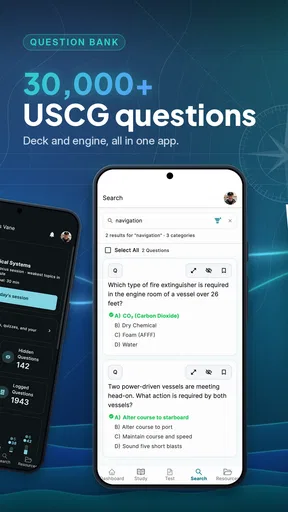
Sea Trials - USCG License Exam is a study and practice app designed for mariners preparing for United States Coast Guard license examinations. It typically organizes questions by relevant subjects, such as navigation, deck operations, safety, rules of the road, and seamanship. The app is intended to support exam preparation and knowledge review, but it should be used alongside official USCG materials and approved training rather than as the only source of study.
Can Sea Trials - USCG License Exam help me pass a USCG examination?
The app can be a useful preparation tool because it lets you review exam-style questions, identify weak areas, and practice recalling important maritime knowledge. However, no study app can guarantee a passing result. USCG examinations cover detailed regulations, calculations, navigation procedures, and practical knowledge, so users should also consult current official publications, verify answers against authoritative sources, and consider formal maritime instruction when preparing for a specific credential.
Which USCG licenses or subjects does the app cover?
Coverage may depend on the version of Sea Trials - USCG License Exam and the content included in your selected study areas. Users should check the app’s current description and in-app categories to confirm whether their target credential is supported, such as an entry-level, deck, or near-coastal examination. Before downloading, compare the listed subjects with the exact endorsement and modules required by the USCG for your intended license.
Does the app work offline, and is an internet connection required?
Many exam-preparation apps allow users to review downloaded question banks without a continuous internet connection, which is convenient onboard or while traveling. Nevertheless, some features may require connectivity, including initial content downloads, account functions, updates, advertisements, analytics, or synchronization. It is best to open the app while connected before studying offline and confirm that the relevant questions and explanations remain accessible without mobile data.
Is Sea Trials - USCG License Exam suitable for beginners?
The app can be helpful for beginners who want to become familiar with USCG-style questions and understand which areas require further study. Still, practice questions alone may be challenging if you have limited maritime experience or do not understand the underlying rules and calculations. New learners should combine the app with a structured course, current navigation references, chart-work practice, and guidance from a qualified maritime instructor.
